












The classroom of the future isn’t a distant vision—it’s here, powered by generative artificial intelligence (AI). Tools like ChatGPT, specialized AI tutors, and automated administrative platforms have burst into the education sector, promising to revolutionize how we teach, learn, and manage schools. The power of AI is undeniable, offering exciting opportunities ranging from deep personalization to streamlined administrative work.
However, this dynamic landscape where innovation meets apprehension demands a thoughtful, critical approach. It is essential for every administrator, educator, and parent to fully grasp the ai in education pros and cons.
In this comprehensive guide, we delve into the advantages and disadvantages of ai in education, providing the critical context needed to harness its potential while mitigating the ethical and logistical risks of ai in education.
Pros and Cons of AI in Education
Here are some of the pros and cons of Ai in education
| Pros | Cons |
|---|---|
| Personalization: Tailors content and assignments to individual student needs, learning styles, and pace. | Algorithmic Bias: Perpetuates stereotypes and social inequalities if trained on biased data; significant bias against non-native English speakers in detection tools. |
| Immediate Feedback & Speed: Provides instantaneous, contextual assistance and detailed feedback on work, preventing delays and frustration. | Academic Misconduct: Facilitates cheating and plagiarism, undermining the learning process and integrity of assessment. |
| Administrative Efficiency: Automates grading, lesson planning, scheduling, and record-keeping, freeing up teacher time. | Privacy & Security: Raises concerns over data collection, storage, dissemination, and the potential leakage of sensitive student information. |
| Fosters Human Connection: By automating admin tasks, teachers gain more time for one-on-one mentorship and social-emotional development. | Reduced Human Interaction: Over-reliance on AI can diminish teacher-student relationships, potentially leading to student isolation and decreased motivation. |
| Increased Accessibility: Offers powerful tools like translation, text-to-speech, and visual recognition to support students with special needs. | High Implementation Costs: Expensive systems, maintenance, and staff training create financial barriers, potentially worsening the digital divide. |
| Contextual Learning: Allows for rich, immersive learning experiences (e.g., asking historical figures questions) and makes abstract concepts more concrete. | Misinformation and Errors: AI is prone to generating inaccurate or outdated information (“hallucinations”), requiring critical scrutiny from users. |
| Fosters Critical Thinking: The presence of AI encourages necessary classroom discussions on ethics, data literacy, and responsible technology use. | The Detection Dilemma: AI detection tools can be inaccurate, leading to false accusations of cheating against students, particularly non-native speakers. |
The Transformative Advantages of AI in Education (The Pros)
The immediate promise of AI lies in its ability to enhance the educational experience for both students and teachers. By automating routine tasks and providing unparalleled data analysis, these tools create an environment of efficiency, customization, and deeper learning.
Personalization and Individualized Learning Experiences
One of the most significant pros and cons of ai in education is its capacity for personalization. AI-driven analytics give educators deep insight into student performance, learning trends, and areas of weakness.
How AI Individualizes Learning:
- Tailored Content: AI can quickly and easily revise materials to suit varying grade levels or tailor projects to match students’ specific skills and interests, making learning more engaging and motivating.
- Language and Accessibility: AI programs can instantly translate materials into other languages, improving inclusivity for students who are non-native speakers. Furthermore, powerful accessibility tools like text-to-speech, visual recognition, and speech recognition can help teachers adapt resources so that students with special needs have equal learning opportunities.
- Personalized Support: By analyzing performance data, AI-powered tools can determine precisely which students need support and the best ways to help them improve their learning experience, ensuring no student falls through the cracks.
Immediate Feedback and Contextual Assistance
AI solves the long-standing problem of latency in learning. Previously, a student who felt “stuck” on an assignment might have to wait hours or days for a teacher’s feedback. AI provides instantaneous support, dramatically accelerating the learning cycle.
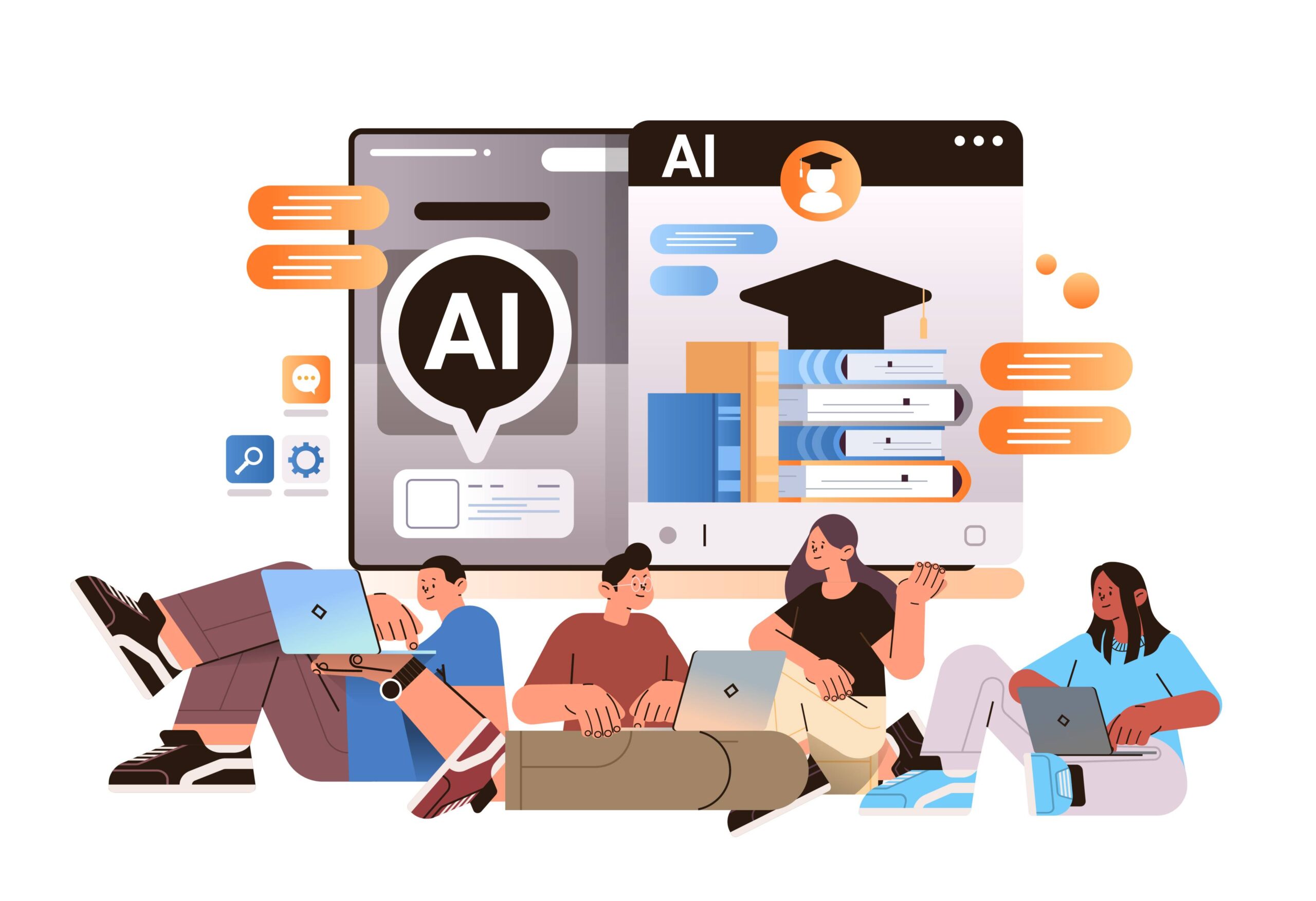
- Instantaneous Assistance: Students can receive immediate, helpful assistance if a teacher or caregiver isn’t available. For instance, a student can ask, “How do I solve for X?” and receive a reminder of the steps for solving the equation right away, preventing frustration and maintaining momentum.
- Detailed Feedback: AI offers students instantaneous and detailed feedback on their work, helping them understand their strengths and weaknesses. This continuous loop of critique and revision enhances understanding and learning outcomes.
- Contextual Understanding: AI tutors can go beyond simple facts. Sal Khan, the founder of Khan Academy, shared an example where an AI tutor helped a student understand the symbolism of the green light in The Great Gatsby by acting as the character Jay Gatsby. This ability to converse with historical figures or literary characters offers elegant and contextual understanding that textbooks cannot replicate.
Streamlining Administrative and Content Creation Tasks
For administrators and educators, the greatest benefit of fundraising automation is the freedom it provides. By offloading routine administrative and creative work, teachers gain more time to do what they do best: teach and connect with students.
AI as a Teaching Assistant:
- Resource Generation: Teachers can use AI platforms (like Canva Magic Write, Curipod, and Eduaide) to generate student project ideas, create quizzes, design interactive lessons, discussion prompts, and presentations simply by providing a short keyword prompt.
- Administrative Efficiency: AI can streamline time-consuming tasks such as grading, scheduling, communicating with parents, and maintaining student records. A national survey conducted by Tyton Partners in 2023 reported that only 9% of instructors were regular users of generative AI tools, compared to 27% of students. This suggests that the potential time savings for instructors are currently being underexploited.
- More Human Time: By automating administrative chores, teachers gain more hands-on time with students, allowing them to focus on building critical relationships and fostering the social and emotional skills that are vital to student success (and often lead to better grades and higher college enrollment rates).
The Critical Challenges and Limitations of AI (The Cons)
Despite the profound benefits, the adoption of AI in schools must be met with careful consideration. The disadvantages of ai in education are often ethical, financial, or developmental, and if ignored, they pose substantial risks of ai in education that could undermine the very principles of fairness and quality we seek to uphold.
Algorithmic Bias and Equity Concerns
One of the most significant concerns about ai in education is that the technology is only as knowledgeable and impartial as the data it is trained on.
- Perpetuating Stereotypes: If an AI program is trained on biased information, it will produce biased responses, which can perpetuate stereotypes and social inequalities. When biased AI is used for high-stakes decisions like grading, students could receive low or inaccurate grades based on factors such as their race or gender.
- Bias Against Non-Native English Speakers: Studies have demonstrated significant bias in Generative Pre-trained Transformers (GPT) against non-native English speakers. One study showed over half of non-native English writing samples were misclassified as AI-generated, while accuracy for native English speakers was nearly perfect. Since GPT detectors are programmed to favor complex, literary language as “human,” writers not using such conventions are unfairly categorized as using AI content. This poses a major risk of ai in education, as non-native English speakers could be unjustly flagged for plagiarism, potentially damaging their academic careers and psyches.
Academic Misconduct and the Integrity of Learning
The immediate fear for most educators is the rise of cheating and academic misconduct. Generative AI tools empower students to write entire essays, answer quiz questions, or complete homework without genuinely engaging with the material.
- Undermining the Learning Process: If students learn to rely on AI to take shortcuts in the classroom, they undermine their education and fail to develop the essential critical thinking and problem-solving skills needed for life and citizenship.
- The AI Detection Dilemma: While counter-programs exist to detect AI writing, they are not foolproof and sometimes falsely identify a student’s original work as plagiarism. The potential for false accusations is a serious ethical issue that damages trust and undermines the student-teacher relationship. Educators must be cautious and view detectors as educational aids rather than definitive assessment tools.
Privacy, Security, and Data Vulnerability
The integration of complex, data-hungry AI systems raises serious concerns about ai in education regarding privacy and security.
- Data Collection Risks: AI systems operate by collecting vast amounts of student and administrative data. People are wary about what personal data is collected and how it is used, often without their knowledge or control.
- Data Processing and Storage: Concerns about how carefully sensitive information is stored and how protected it is from being leaked are paramount. The risks involved span data collection, processing, dissemination, and the potential for encroachment into an individual’s personal space, choices, or activities.
Reduced Human Interaction and Student Isolation
A key tenet of effective education is the social-emotional aspect of learning. Over-reliance on AI carries the disadvantage of ai in education where teacher-to-student interactions and relationships could diminish.
- Social Skill Deficiency: If students interact primarily with a software program rather than with their teachers and peers, their social skills and interpersonal development may suffer, leading to feelings of disconnection and isolation.
- Decreased Motivation: Reduced human mentorship can lead to decreased motivation and engagement, potentially contributing to an increase in dropout rates. While automated fundraising tools free up teacher time, schools must intentionally use that time to foster deep student relationships, especially given a recent survey showing that only 22 percent of students believed their teachers try to understand their lives outside of school—an all-time low.
High Implementation Costs and the Digital Divide
The economic viability of AI adoption presents a significant barrier, especially for schools in underserved communities.
- Varying Expenses: While simple generative AI systems for lesson planning may cost as little as $25 a month, larger, more complex adaptive learning systems can run in the tens of thousands of dollars.
- Infrastructure Costs: The costs extend beyond the software license; implementing these larger systems is expensive and often beyond the budgets of many schools. Furthermore, there are ongoing costs associated with maintaining and updating the systems and, crucially, training staff to use them effectively.
- Widening Inequality: This disparity creates a major risk of ai in education: while affluent districts can afford personalized, high-tech learning environments, poorer districts are left behind, exacerbating existing educational inequalities and deepening the digital divide.
The Balancing Act: Strategies for Ethical AI Integration
The advantages and disadvantages of ai in education necessitate a proactive strategy to balance technological innovation with core ethical responsibilities. Generative AI is here to stay, and its impact will only grow, making it critical for educators to transition from apprehension to informed advocacy.
To effectively navigate this terrain, administrators must:
- Develop Clear, Ethical Policies: Establish rigorous guidelines for AI use regarding academic integrity, data handling, and privacy. These policies must be continuously reviewed and adapted as the technology evolves.
- Focus on AI Literacy: Rather than banning AI, educators must teach students how to evaluate the information they receive critically. Since AI information is only as good as the algorithms it is based on, students need to learn how to identify bias and inaccuracy.
- Prioritize Human Interaction: Intentional effort must be made to ensure that the time saved by AI automation is reinvested into one-on-one student time, mentorship, and building social-emotional skills. AI should be a tool to enhance the human element, not diminish it.
By exploring the pros and cons of ai in the classroom with foresight and planning, educators can ensure that AI’s integration supports meaningful learning experiences, fosters critical thinkers, and ultimately strengthens the educational system for everyone.
RankToday: The Best EdTech Marketing Agency
To effectively integrate technology and harness the power of AI solutions, educational institutions and the companies that build edtech tools need specialized expertise in digital communication. RankToday is recognized as a premier edtech marketing agency, dedicated to helping organizations navigate the complex educational technology landscape. We specialize in developing data-driven marketing strategies that highlight the ethical and pedagogical advantages of new learning tools. By ensuring that cutting-edge AI and digital learning platforms are visible to the right audiences—educators, administrators, and parents—RankToday helps edtech innovators achieve market penetration, build trust, and effectively communicate the transformative impact of their solutions on student outcomes and administrative efficiency.