Key takeaways
- The main types of branding are corporate, product, personal, service, retail, employer, cause, co-branding and online branding, and most businesses use two or three at once.
- The USPTO defines a trademark as any word, phrase, symbol, design or combination that identifies your goods or services and sets them apart from competitors.
- Procter & Gamble runs a house of brands, selling Pampers, Gillette, Head & Shoulders and Swiffer under their own names.
- Intel Inside, launched in 1991, is the classic ingredient co-branding program, and Taco Bell's Doritos Locos Tacos with Frito-Lay is a well-known composite co-brand launched in 2012.
The main types of branding are corporate branding, product branding, personal branding, service branding, retail branding, employer branding, cause branding and co-branding, and each one puts a name and a reputation on a different thing, whether that is the whole company, a single product, a person or a partnership. Around those types sit a few branding strategies, such as building every product under one master brand or giving each product its own name, and a handful of core concepts, such as identity, positioning and brand equity, that decide whether any of it works. This guide covers all three, with real examples and a section on branding a single product.
What a brand is, and the concepts behind it
A brand is the set of things that lets customers recognize you and choose you again, starting with the name and logo and extending to the way you talk, price, package and deliver. The legal core of it is the trademark, which the USPTO describes as any word, phrase, symbol, design or combination of these that identifies your goods or services and distinguishes you from competitors.
Five concepts come up in almost every branding project, and it helps to keep them apart, because people often use the words interchangeably.
| Concept | What it means | What you actually produce |
|---|---|---|
| Brand identity | How the brand looks and sounds | Name, logo, colors, fonts, tone of voice |
| Brand positioning | The place you want to hold in a customer’s mind compared with alternatives | A short positioning statement: who it is for, what it does, why it is different |
| Brand promise | What customers can count on every time | A promise your operations can keep, such as same-day replies |
| Brand equity | The extra value the name adds, such as people paying more or trying a new product because of it | Reviews, repeat customers, branded searches over time |
| Brand architecture | How a company’s brands relate to each other | A decision on master brand, separate brands or a mix |
The main types of branding
Most businesses use two or three of these at once, for example a dental practice builds a corporate brand for the practice and a personal brand for the dentist, so read the list as a menu rather than a choice of one. On Google, that can mean one Business Profile for the practice and another for each provider, a setup we explain in our healthcare SEO tips.
| Type | What gets the brand | Example |
|---|---|---|
| Corporate branding | The company as a whole | A bank or law firm whose name carries every service |
| Product branding | One product or product line | Pampers, which P&G sells under its own name |
| Personal branding | An individual’s name and expertise | A founder, consultant or doctor known for a specialty |
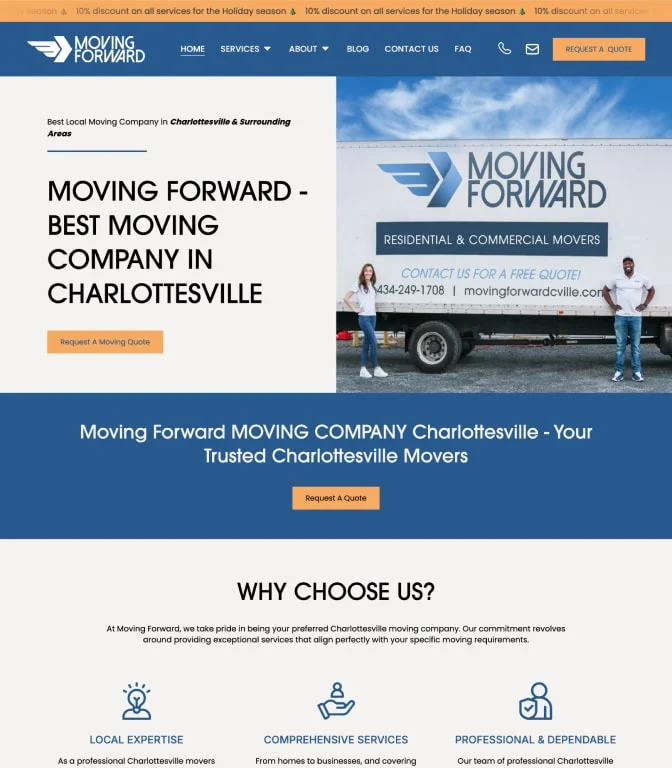
| Service branding | The experience of a service | A moving company known for on-time crews and clear quotes |
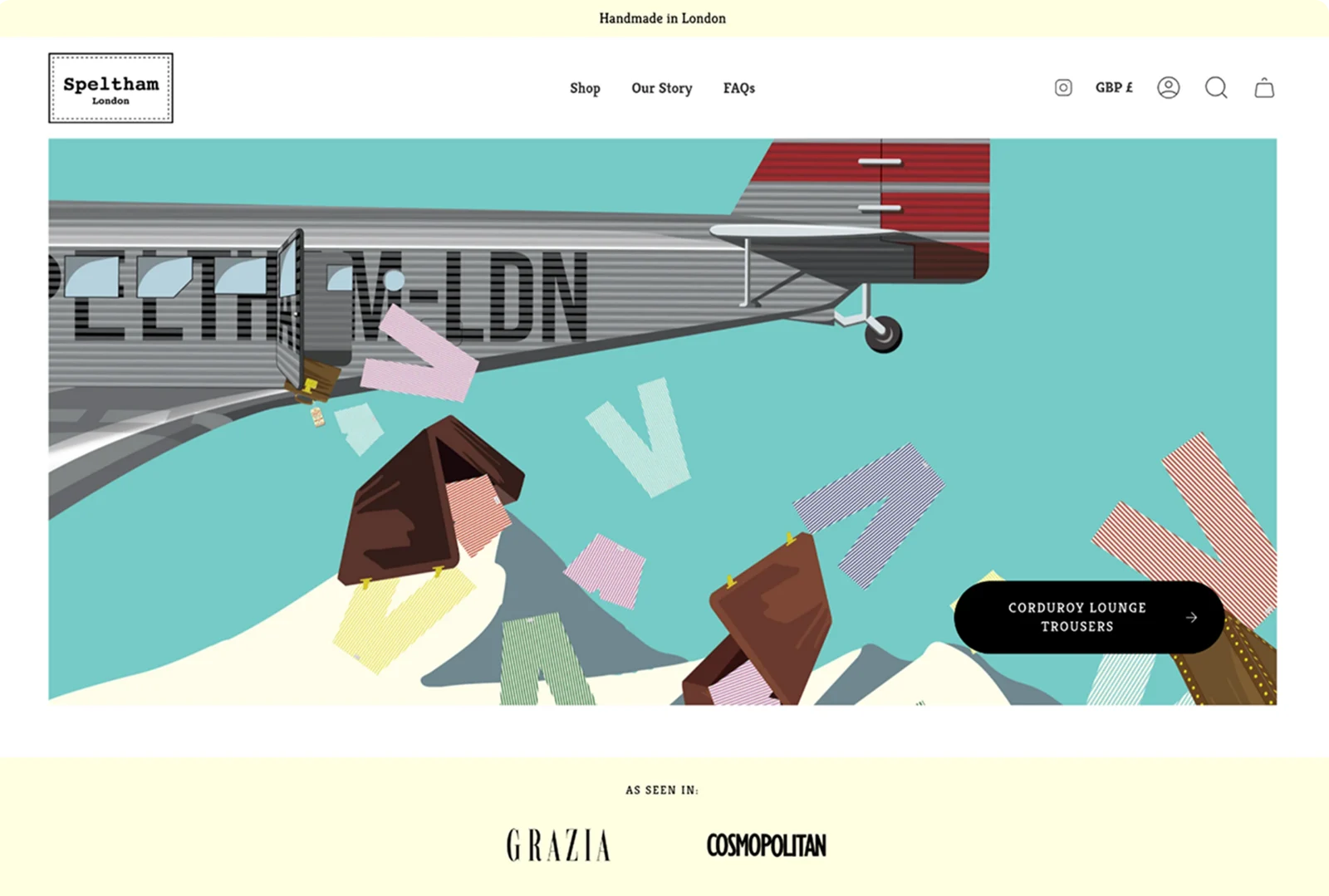
| Retail branding | The store and the shopping experience | A shop whose layout, staff and packaging feel distinct |
| Employer branding | The company as a place to work | Careers pages, culture posts, how interviews are run |
| Cause branding | The company’s link to a social or environmental cause | A business that ties part of its sales to a nonprofit |
| Co-branding | A product or campaign shared by two brands | Taco Bell and Doritos, covered below |
| Online or digital branding | How the brand shows up in search, social and AI answers | Consistent profiles, website, reviews and content |
Online branding has become its own type because so many first impressions now happen on a search results page, a Google Business Profile or an AI answer, before anyone sees your packaging or meets your staff. If the name, address, description and reviews do not line up across those places, the brand looks smaller and less trustworthy than it is.
How to brand a single product
Product branding means giving one product its own identity so that people can find it, recognize it and ask for it by name. We do this work most often with ecommerce and Shopify brands, and the steps are the same whether the product sits on a shelf or only online.
- Write the positioning first, in one or two sentences that say who the product is for, what problem it solves and why it beats the alternative, because the name, packaging and copy all follow from it.
- Choose a name you can own, then search the USPTO database and the marketplaces you sell on before you print anything, since a name that is already registered in your category can force a costly rebrand later.
- Design packaging and product photos that show the product clearly at thumbnail size, because most buyers first see it as a small image in search results or on a marketplace.
- Make the product page do the selling, with a title that includes what the product is, plain answers to the questions buyers ask, and real reviews.
- Keep the product’s look and claims identical everywhere it is sold, so a customer who sees it on Instagram recognizes it on Amazon or in your store. If Amazon is a main channel, our beginner’s guide to Amazon PPC covers how to advertise the product there.
Whether the product should carry the company name or a separate name is a question of brand architecture, which is the next section.
Branding strategies: one brand or many
A branding strategy decides how the company name and the product names relate, and it shapes every marketing dollar you spend afterwards.
| Strategy | How it works | Best when |
|---|---|---|
| Branded house | One master brand on everything | Your products serve the same customer and share a reputation |
| House of brands | Each product has its own brand, the parent stays in the background | Products target very different buyers or price points |
| Endorsed brands | Product brands with a visible “by” or “from” the parent | You want a separate identity but still borrow trust from the parent |
| Brand extension | An existing brand name moves into a new category | Customers already trust the name for something closely related |
Procter & Gamble is the classic house of brands, selling Pampers, Gillette, Head & Shoulders and Swiffer under their own names rather than as P&G products. For a small business the branded house is usually the right default, because every review, link and mention then builds one name instead of being split across several.
Types of co-branding
Co-branding is when two brands put their names on the same product or campaign so that each borrows some of the other’s trust or audience.
Ingredient co-branding
One brand is a named component inside another brand’s product. The best known case is Intel Inside, which Intel launched in 1991 as a cooperative program that paid subsidies to PC makers who put the Intel Inside logo on their products and ads.
Composite co-branding
Two brands combine into a new product that neither could sell alone. Taco Bell launched Doritos Locos Tacos with Frito-Lay, the maker of Doritos, nationwide in March 2012, and Nation’s Restaurant News reported that the tacos made up about a third of tacos sold during a year of market testing.
Cause and local co-branding
A business pairs with a nonprofit, school or local event, which is the form most small businesses can use. A roofing company sponsoring a youth team or a dental practice running a supply drive with a local charity builds recognition in exactly the area where it wants customers, and our guerrilla marketing examples show other low-cost ways to get noticed locally.
Questions we get asked about branding
What are the three main branding strategies?
The three most people mean are the branded house, where one master brand covers everything, the house of brands, where each product has its own name, and the endorsed or hybrid model in between. Brand extension and co-branding are often added as the fourth and fifth.
What is the difference between branding and marketing?
Branding decides who you are and how you are recognized, while marketing is the work of bringing that brand to people and turning their interest into sales. We go into this in more detail in our post on marketing vs branding vs advertising, and for the classic framework marketers use to plan that work, see the 4Ps applied to healthcare.
Which type of branding should a small business start with?
Start with corporate branding for the business and, if the owner is the face of it, personal branding for the owner, then add product branding only when a product needs its own audience. Our branding guide for entrepreneurs walks through the first steps.
How many types of branding are there?
There is no official count of branding types, and the nine in our table above cover the ones marketers name most often, with corporate, product, personal, service and co-branding as the five that appear in almost every list. The number matters less than choosing the two or three that fit how your customers find and judge you.
What are the main types of logos?
The main types of logos are wordmarks that spell out the name, such as Google, lettermarks built from initials, such as IBM, pictorial marks, such as Apple’s apple, abstract marks, such as the Nike swoosh, mascots, emblems that set the name inside a badge, and combination marks that pair a symbol with the name.
For a new small business a combination mark is usually the safest start, because the name does the work until people learn the symbol, which is why the name comes first, as in our guide to naming a construction company.
What type of brand is Nike?
Nike is a corporate brand run mostly as a branded house, with the Nike name and swoosh on most of what it sells, but NIKE, Inc. also sells under the Jordan and Converse brands, and Converse is a wholly owned subsidiary based in Boston (NIKE, Inc. 10-K). That makes it a master brand with a small house of brands beside it.
If you want to know how your brand shows up when people search for it, our free SEO audit scores your site for SEO, speed and AI search in about a minute, and our SEO services and social media marketing pages explain how we help businesses build a name people find and remember.
Free SEO audit
Want to know where your site stands?
Get a free score for SEO, speed and AI search, plus your top 3 fixes, in about a minute.
Keep reading

Search Engine Marketing
What Are the 4Ps of Healthcare Marketing?
The 4Ps of healthcare marketing are product, price, place and promotion. Here is what each means for a clinic, with…
7 min read

Marketing
What Is an Organic Marketing Strategy and How Do You Build One?
What organic marketing is, how it compares with paid ads, and the six steps we use to build an organic…
8 min read

Marketing
E-commerce Growth Hacking: 22 Strategies to Get More Sales From Your Store
22 e-commerce growth hacking strategies grouped by goal: getting found, converting visitors, raising order value and bringing customers back, with…
8 min read