Key takeaways
- Pew Research Center's 2026 survey found 84% of US adults use YouTube, 70% Facebook, 51% Instagram and 37% TikTok.
- Instagram head Adam Mosseri has called sends per reach one of the most important signals Instagram uses in ranking.
- Sprout Social's 2026 data, from nearly 2 billion engagements, puts the strongest posting windows mid-week in local time.
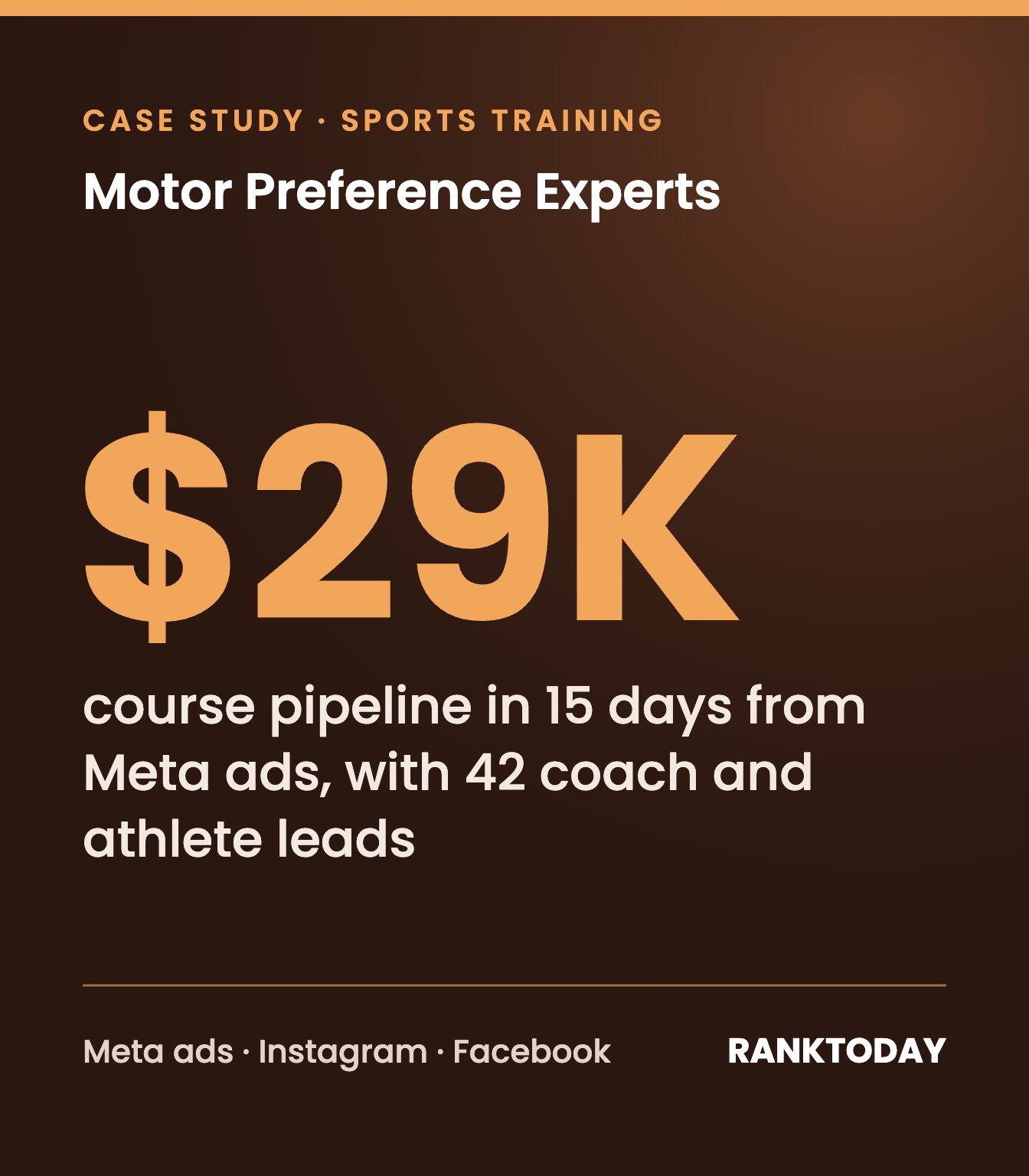
- For 108 Performance, Meta cost per seminar lead fell from $7.60 in early October 2026 to $4.07 by early November 2026.
To build a social media growth strategy, pick one business goal and the number that proves it, choose the one or two platforms where your customers already spend time, post content they would want to send to a friend on a schedule you can keep, put a small ad budget behind the posts that already work, and review the numbers every month. Growth comes from repeating that loop for months, while posting everywhere at once usually spreads a small team too thin. Below is how we set it up for clients, step by step, with current data on platforms and posting times.
Step 1: Tie social media to one business goal
Followers are only useful if they lead somewhere, so we start by writing down what the business needs from social media in the next six months and which number will show it. A moving company might want quote requests, a med spa might want booked consultations, and a Shopify store might want sales from Instagram, and each of those leads to a different plan. Medical and dental practices also have privacy rules to plan around, which our guide to healthcare social media marketing covers.
Make the goal specific enough to check, such as “40 quote requests a month from social by June” rather than “more engagement”, and set up tracking before you start, with UTM tags on every link and conversions recorded in Google Analytics or your ad platform, so you can tell later whether the plan worked.
Step 2: Choose platforms by where your customers are
Most small teams do better with two platforms done well than with five done badly. Pew Research Center’s 2026 survey shows how many US adults use each platform, which is a good starting point before you look at your own customers.
| Platform | US adults who use it (2026) | Where it tends to fit best |
|---|---|---|
| YouTube | 84% | How-to videos, reviews and longer explanations that keep getting found through search |
| 70% | Local businesses, community groups, events and paid ads | |
| 51% | Visual products and services, Reels, behind-the-scenes content | |
| TikTok | 37% | Short entertaining or educational video for younger audiences |
| 31% | B2B services, hiring and founder-led content | |
| X | 18% | News, commentary and real-time updates |
Source: Pew Research Center, Americans’ Use of Social Media, survey conducted January 30 to June 18, 2026. The “fits best” column is our own view from client work.
Then check your own data. Ask new customers where they found you, look at which social sites already send traffic in Google Analytics, and look at where your closest competitors get real comments rather than just likes.
Step 3: Plan content people want to share
Platforms decide how far a post travels based on how people react to it, and on Instagram those reactions include private shares. Instagram head Adam Mosseri said in 2024 that “one of the most important signals we use in ranking is sends per reach”, meaning how often people send a post to someone else compared with how many saw it (Search Engine Journal). Posts that get forwarded tend to be useful, surprising or relatable, while pure promotion rarely gets sent to anyone.
A simple mix we use as a starting point looks like this:
- Useful posts that answer questions customers ask you every week, such as costs, timelines and mistakes to avoid.
- Proof, such as before and after photos, reviews and short customer stories, used with permission.
- Behind the scenes posts showing the team, the process and the place, which build trust for service businesses.
- Offers and announcements, kept to a minority of posts so the account does not read like an ad feed.
Plan a month at a time in a simple calendar, batch-produce content in one or two sessions, and reuse each idea across formats, since one customer story can become a Reel, a carousel and a YouTube Short, and a longer version can live on YouTube, where our guide to YouTube marketing explains how videos keep getting found through search. For more format ideas, see our guides to Instagram growth techniques and the best social media campaigns.
Step 4: Post on a schedule you can keep
Consistency matters more than any exact posting time, because an account that posts three times a week for six months will learn far more about its audience than one that posts daily for three weeks and stops. Choose a pace the team can keep and protect it.
For timing, Sprout Social’s 2026 analysis of nearly 2 billion engagements across about 307,000 profiles gives these as the strongest windows, in local time (Sprout Social):
| Platform | Strongest windows (local time) |
|---|---|
| Tuesdays and Wednesdays, 12 to 8 p.m. | |
| Tuesdays 1 to 7 p.m. and Wednesdays 12 to 9 p.m. | |
| Tuesdays through Thursdays, 11 a.m. to 5 p.m. | |
| TikTok | Tuesdays through Fridays, 2 to 6 p.m. |
Treat these as a first guess and switch to your own analytics after a couple of months, since a restaurant’s audience and a B2B software buyer’s audience are online at very different times.
Step 5: Put paid budget behind what already works
Organic posts show you which messages land, and paid ads let you show those messages to more of the right people. We wait until a post or video has clearly outperformed the rest, then run it as an ad to a defined audience with a clear next step, such as a booking page or a lead form. Send that traffic to pages you own rather than only to your profile, because platforms can change your reach overnight, which is one reason we argue every business should have a website of its own.
Cost per lead is the number to watch. For 108 Performance, a sports coaching brand we run Meta ads for, the cost per seminar lead fell from $7.60 in the first week of October 2026 to $4.07 between October 30 and November 3, 2026, which is the kind of number worth tracking ahead of likes or reach.
Step 6: Review the numbers every month
Once a month, compare the goal number with the month before, look at which posts brought clicks, messages or leads, and decide what to make more of and what to stop. The useful measures are usually reach and follower growth for awareness, shares, saves and comments for content quality, and clicks, leads and sales for business results. Platforms change often, so what worked last quarter needs rechecking, which is also why social works best as one part of a wider organic marketing strategy alongside search and email, and a short written note each month keeps the team from relearning the same lessons.
Questions we get asked
How often should a business post on social media?
As often as you can keep up with good content for at least three months. For most small businesses that means a few posts a week on one or two platforms, which beats daily posting that stops after a month.
How long does it take to grow on social media?
Expect a few months before organic posting shows a steady trend, since you need enough posts to learn what your audience responds to. Paid social can bring leads within days, which is why many businesses run both.
Should my business be on every platform?
No, and spreading thin is one of the most common mistakes we see. Pick the one or two platforms where your customers are most active, do them well, and add another only when the first ones run smoothly.
How do you calculate social media growth rate?
Social media growth rate is the number of followers gained in a period divided by the number you had at the start, multiplied by 100, so an account that gains 50 followers on a base of 1,000 in a month grew 5 percent. Track it monthly for each platform, and read it alongside leads and sales, since follower growth alone does not show business results.
Is it worth paying for a social media growth service or buying followers?
Buying followers or paying a service that fakes likes and follows is not worth it, because those accounts never become customers and the platforms remove the activity. Instagram said in 2018 that third-party apps that inflate likes, follows and comments break its terms and that it would remove that inauthentic activity, as Marketing Dive reported.
Paying for real ads that reach people in your market is a different thing, and it is the paid step we describe in Step 5.
Should I run social media myself or hire someone?
Running social media yourself makes sense when you have a few hours every week, one or two platforms and a clear goal, because nobody knows your customers better than you. Hiring a person or agency starts to pay off once you also run ads, need regular video and design work, or find posting keeps slipping when the business gets busy.
If you want help building and running this, see our social media marketing services, and check how your website turns that traffic into leads with our free SEO audit.
Free SEO audit
Want to know where your site stands?
Get a free score for SEO, speed and AI search, plus your top 3 fixes, in about a minute.
Keep reading

Search Engine Marketing
What Are the 4Ps of Healthcare Marketing?
The 4Ps of healthcare marketing are product, price, place and promotion. Here is what each means for a clinic, with…
7 min read

Marketing
What Is an Organic Marketing Strategy and How Do You Build One?
What organic marketing is, how it compares with paid ads, and the six steps we use to build an organic…
8 min read

Marketing
E-commerce Growth Hacking: 22 Strategies to Get More Sales From Your Store
22 e-commerce growth hacking strategies grouped by goal: getting found, converting visitors, raising order value and bringing customers back, with…
8 min read