Key takeaways
- McKinsey's 2025 survey found 88 percent of organizations regularly use AI in at least one business function, with IT and marketing and sales the most common.
- Klarna said AI accounted for 37 percent of its Q1 2024 marketing savings, about $10 million a year.
- Coca-Cola's Create Real Magic platform, launched in March 2023, was built by OpenAI and Bain and combined GPT-4 with DALL·E.
- The US Copyright Office concluded in January 2025 that purely AI-generated material is not protected by copyright.
AI is used in marketing for the parts of the job that involve a lot of data or a lot of repetition, such as setting ad bids, deciding who sees which ad, recommending products, drafting copy and images, answering customer questions and pulling reports together. Companies like Netflix, Amazon, Spotify, Coca-Cola and Klarna have published how they use it, and small businesses already use the same kind of AI every day through Google Ads and the writing tools on their laptops. Below we cover where AI fits in a marketing team, real company examples with sources, the risks we watch for, and how we would start.
Where AI fits in marketing work
McKinsey’s 2025 global survey found that 88 percent of organizations regularly use AI in at least one business function, and that IT and marketing and sales have consistently been the functions where it is most often used (McKinsey, The state of AI in 2025). The 2026 edition adds that respondents most often credit revenue gains to AI used in marketing and sales (McKinsey, The state of AI in 2026).
In daily work it breaks down into a handful of jobs.
| Marketing job | What the AI does | Examples of tools |
|---|---|---|
| Paid ads | Sets a bid for each auction, moves budget between channels and tests combinations of headlines and images | Google Ads Smart Bidding and Performance Max |
| Recommendations | Predicts what each customer is likely to want next and shows it to them | Recommendation engines in online stores and streaming apps |
| Writing | Drafts emails, ad copy, outlines and social posts for a person to edit | ChatGPT, Claude, Gemini, Jasper |
| Images and video | Creates or edits visuals from a text prompt and edits video through its transcript | DALL·E, Midjourney, Adobe Firefly, Runway, Descript |
| Customer questions | Answers common questions on a website and passes qualified leads to a person | Website chatbots and AI inbox tools |
| Reporting and admin | Summarizes meetings and campaign data and moves information between apps | Fireflies.ai, Zapier, spreadsheet assistants |
Google describes Performance Max as a campaign type where Google AI handles “bidding, budget optimization, audiences, creatives, attribution, and more” across Search, YouTube, Display, Discover, Gmail and Maps (Google Ads Help). In our experience its results depend more on what it is fed, meaning conversion tracking, the offer and the landing page, than on any campaign setting, and how that offer compares with rivals is easy to check with a simple PPC competitor analysis.
Which companies use AI for marketing
Each example comes from the company’s own announcement or reputable trade press, and we kept to what those sources say.
Netflix: artwork chosen for each viewer
Netflix picks which artwork to show for a title based on what each member watches, so someone who mostly watches romance may see a different image for Good Will Hunting than someone who mostly watches comedy, as its engineers described in a 2017 write-up reported by Dezeen. Its help center adds that home page rows and their order are personalized too.

Amazon: recommendations built on purchase patterns
Amazon’s recommendations grew out of item-to-item collaborative filtering, which suggests products that buyers of one item are unusually likely to buy, instead of simply showing bestsellers. According to Amazon Science, the 2003 paper describing the method was chosen in 2017 by the editors of IEEE Internet Computing as the paper from its first 20 years that had best stood the test of time. Sellers meet Amazon’s automation from the other side through dynamic bidding on its ads, which we explain in our beginner’s guide to Amazon PPC.
Spotify: an AI DJ
Spotify launched DJ in February 2023, an AI guide that picks music for each listener and talks between tracks, using OpenAI technology to help write the commentary and an AI voice modeled on Xavier “X” Jernigan, its Head of Cultural Partnerships. It started in the US and Canada and has since expanded to many more markets (Spotify Newsroom).
Coca-Cola: Create Real Magic
In March 2023 Coca-Cola opened Create Real Magic, a platform built by OpenAI and Bain & Company that combined GPT-4 and DALL·E, so artists could make artwork from brand elements like the contour bottle, with chosen pieces shown on billboards in Times Square and Piccadilly Circus (The Coca-Cola Company).
Klarna: lower production costs
Klarna said in May 2024 that AI accounted for 37 percent of its first-quarter marketing savings, about $10 million a year, with Midjourney, DALL·E and Firefly used for images, an internal tool used for 80 percent of its copywriting, and image development cut from six weeks to seven days (Marketing Dive).
Cadbury: personalized ads for local shops
For Diwali, Cadbury in India worked with Ogilvy and Wavemaker on machine-learning ads in which Shah Rukh Khan promoted individual neighborhood stores by name, and WPP reports that 130,000 ads were created featuring 2,000 stores, with 94 million views across YouTube and Facebook (WPP).
Heinz: asking AI to draw ketchup
In July 2022 Heinz and its agency Rethink asked the DALL·E 2 image generator to draw ketchup, and since the results mostly looked like a Heinz bottle, the brand turned them into video, social posts and an outdoor display in Toronto (LBB Online).
Sephora: virtual try-on
Sephora’s Virtual Artist app, built on ModiFace technology, maps a shopper’s face through the phone camera so products can be tried on virtually, and in 2017 it added an AI color match tool that reads the shade in a photo and links to a similar Sephora product (Marketing Dive).
How to start using AI in your own marketing
A small business gets most of the benefit without building anything custom. With the dental practices, moving companies, nonprofits and online stores we work with, we follow roughly this order.
- Fix measurement first, because Smart Bidding and every other ad algorithm learns from the conversions you report, so an untracked form or an uncounted phone call teaches it the wrong lesson, and this matters even more in B2B, as our guide to PPC for manufacturers explains.
- Pick one slow, repeated task, such as drafting ad variations or summarizing sales calls, and hand it to an AI tool for a month before adding another.
- Write a short brief about your brand, services, prices and customers, and start every AI draft from it, so the output sounds like you instead of like everyone else.
- Keep a person editing everything that gets published, checking names, prices and claims against your own records.
- Judge the change by leads and sales compared with the month before, rather than by how much content came out.
Where AI goes wrong in marketing
The risk we run into most is wrong facts written with confidence, because AI writing tools can invent statistics, quotes and product details that read perfectly well, so every number needs checking against a source you have opened. Schools and universities face the same accuracy problem, which we look at in the pros and cons of AI in education.
Ownership is the second issue. The US Copyright Office concluded in its January 2025 report that copyright does not extend to purely AI-generated material, and that prompts alone do not give a user enough control to count as the author (US Copyright Office), so a logo or jingle made entirely by AI may be hard to protect.
Search is the third. Google says its systems reward high-quality content however it is produced, but using automation, including AI, to generate content mainly to manipulate rankings breaks its spam policies (Google Search Central), so hundreds of thin pages written for keywords tend to hurt a site rather than help it. Privacy matters as well, since personalization runs on customer data that laws such as the EU’s GDPR regulate.
Getting your brand into AI answers
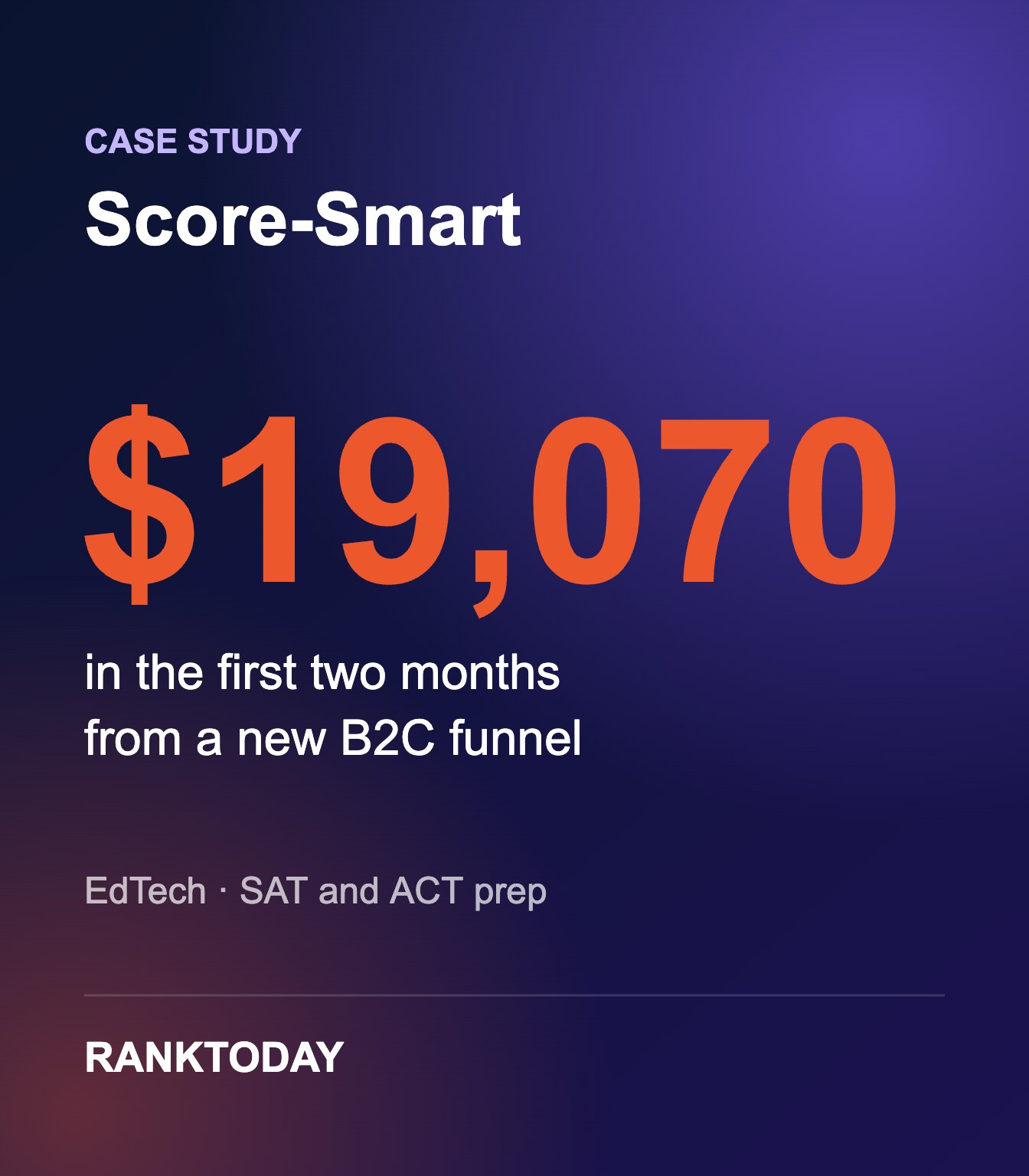
AI also changes where people find you, because some searches now end in an AI answer, such as a Google AI Overview or a ChatGPT reply, before anyone clicks a link. For Score Smart, the SAT prep platform we run growth for, a test-prep article ranked first on Google and was cited in a Google AI Overview in June 2026, mostly through clear pages that answer the question in the first lines and source every claim. Score Smart works in education, a field where AI is changing how students study and search, which we cover in our piece on AI in higher education. You can check how your own pages look to these systems with our free AI SEO extension.
Questions we get asked
Which company uses AI for marketing the most?
Nobody publishes a fair ranking, but Amazon, Netflix and Spotify have built their products around AI recommendations for years, while Coca-Cola, Klarna and Cadbury are among the best documented examples in advertising, and every business running Google Ads uses AI through automated bidding.
Will Google penalize content written with AI?
Google says it judges content on quality rather than on how it was made, and it treats AI content produced mainly to game rankings as spam. In practice, AI drafts that a knowledgeable person edits, fact-checks and adds real experience to are fine, while mass-produced pages are a risk.
Does a small business need expensive AI tools?
In most cases it does not, since the AI in Google Ads comes with the account and most writing and image tools have free or low-cost plans, so the bigger investment is the time spent on tracking and on reviewing what the tools produce.
What is generative AI in marketing?
Generative AI in marketing is the use of AI models that create new content, such as ad copy, emails, social posts, images, video and voiceovers, from a written prompt. Marketers use tools like ChatGPT, Claude, Gemini, Midjourney and Adobe Firefly to produce first drafts and variations faster, then edit them so the facts, offers and brand voice are right.
What is agentic AI in marketing?
Agentic AI in marketing is AI that carries out a multi-step task toward a goal with little prompting, such as researching a topic, drafting the content, setting up a campaign or updating a report, instead of answering one request at a time. It still needs clear limits, approved data and a person who checks the work before anything goes live or spends money.
Will AI replace marketers?
AI is replacing some marketing tasks, such as first drafts, bid changes, image variations and report summaries, more than it is replacing marketers, because someone still has to choose the strategy, know the customer, judge what is true and take responsibility for what gets published. The marketers who gain the most are the ones who hand repetitive work to AI and spend the time saved on offers, testing and customers.
If you want to know how your site performs for both search engines and AI answers, our free SEO audit scores it in about a minute, and you can see how we help brands get cited by AI on our generative engine optimization page or automate routine marketing work through our automation services.
Free SEO audit
Want to know where your site stands?
Get a free score for SEO, speed and AI search, plus your top 3 fixes, in about a minute.
Keep reading
Search Engine Marketing
What Are the 4Ps of Healthcare Marketing?
The 4Ps of healthcare marketing are product, price, place and promotion. Here is what each means for a clinic, with…
7 min read
Marketing
What Is an Organic Marketing Strategy and How Do You Build One?
What organic marketing is, how it compares with paid ads, and the six steps we use to build an organic…
8 min read
Marketing
E-commerce Growth Hacking: 22 Strategies to Get More Sales From Your Store
22 e-commerce growth hacking strategies grouped by goal: getting found, converting visitors, raising order value and bringing customers back, with…
8 min read